
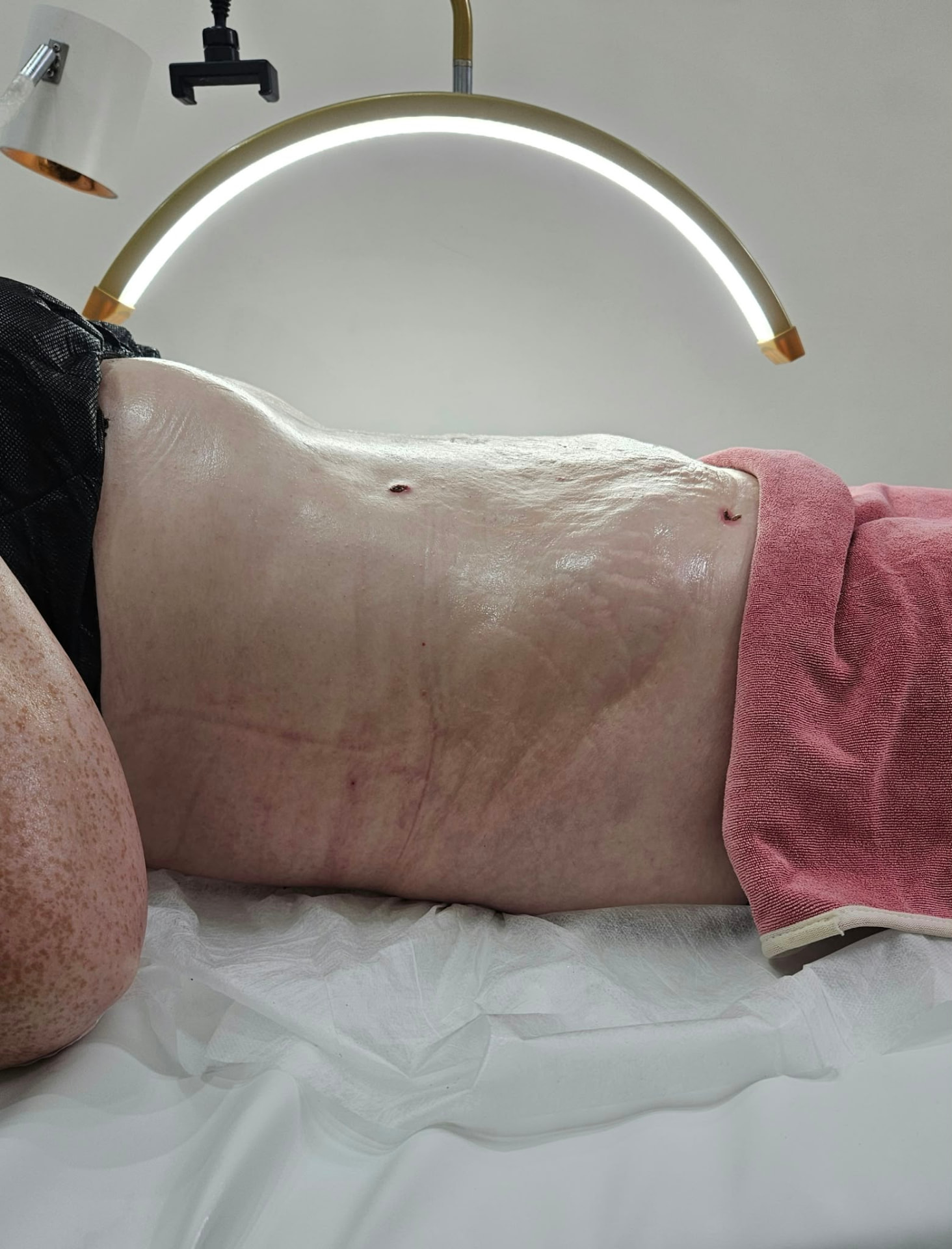
Lymphatic DrainageMassage in EnfieldFor Post-Surgical Recovery
Manual lymphatic drainage moves trapped fluid out of the tissue after surgery, reducing swelling, easing discomfort and helping your final shape settle smooth and even. It is the treatment that decides how a liposuction result actually looks, and it is also a genuinely relaxing course of work if you have not had surgery at all.
Post-operative clients seen six days a week, 10am to 7pm · assessment at your first session
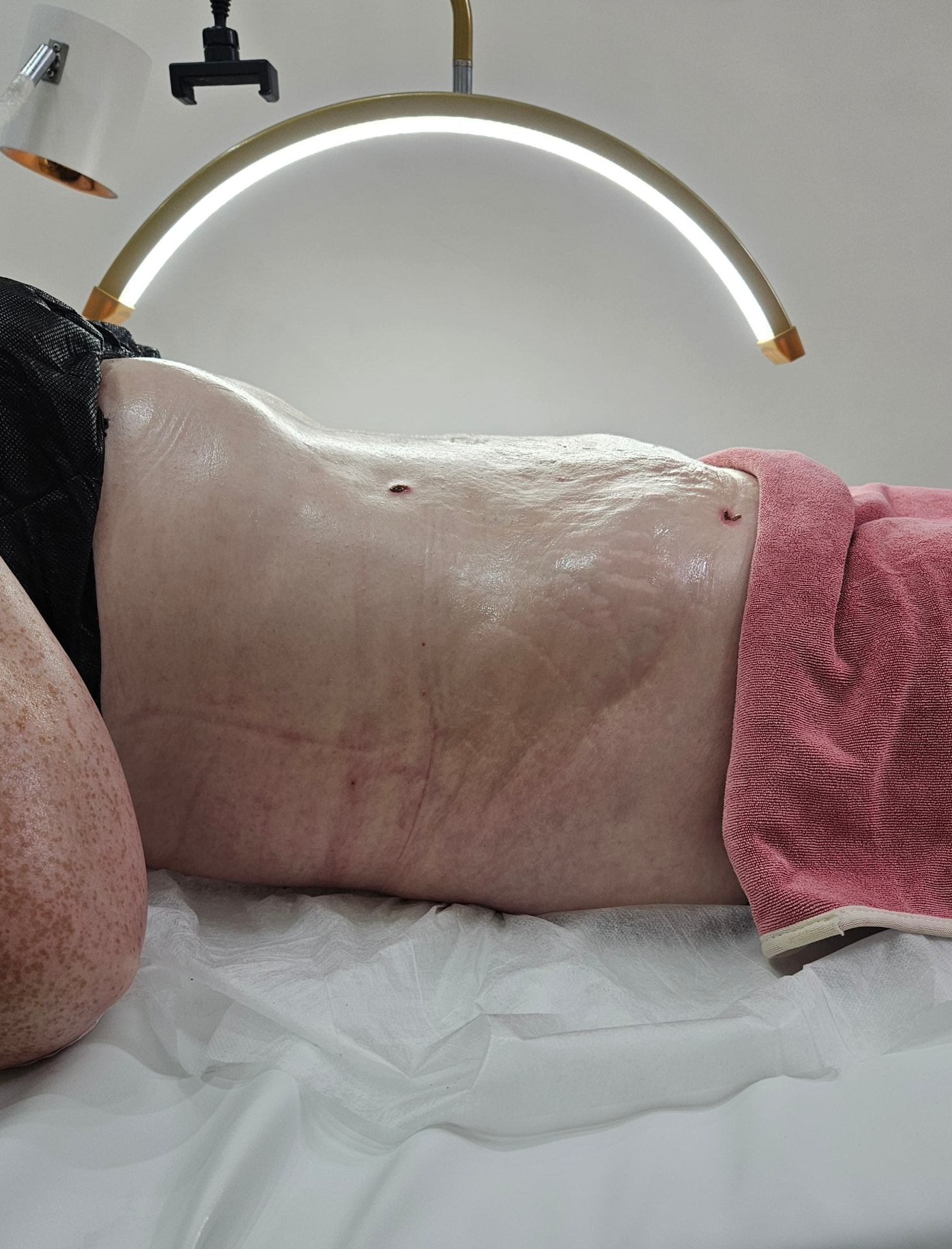
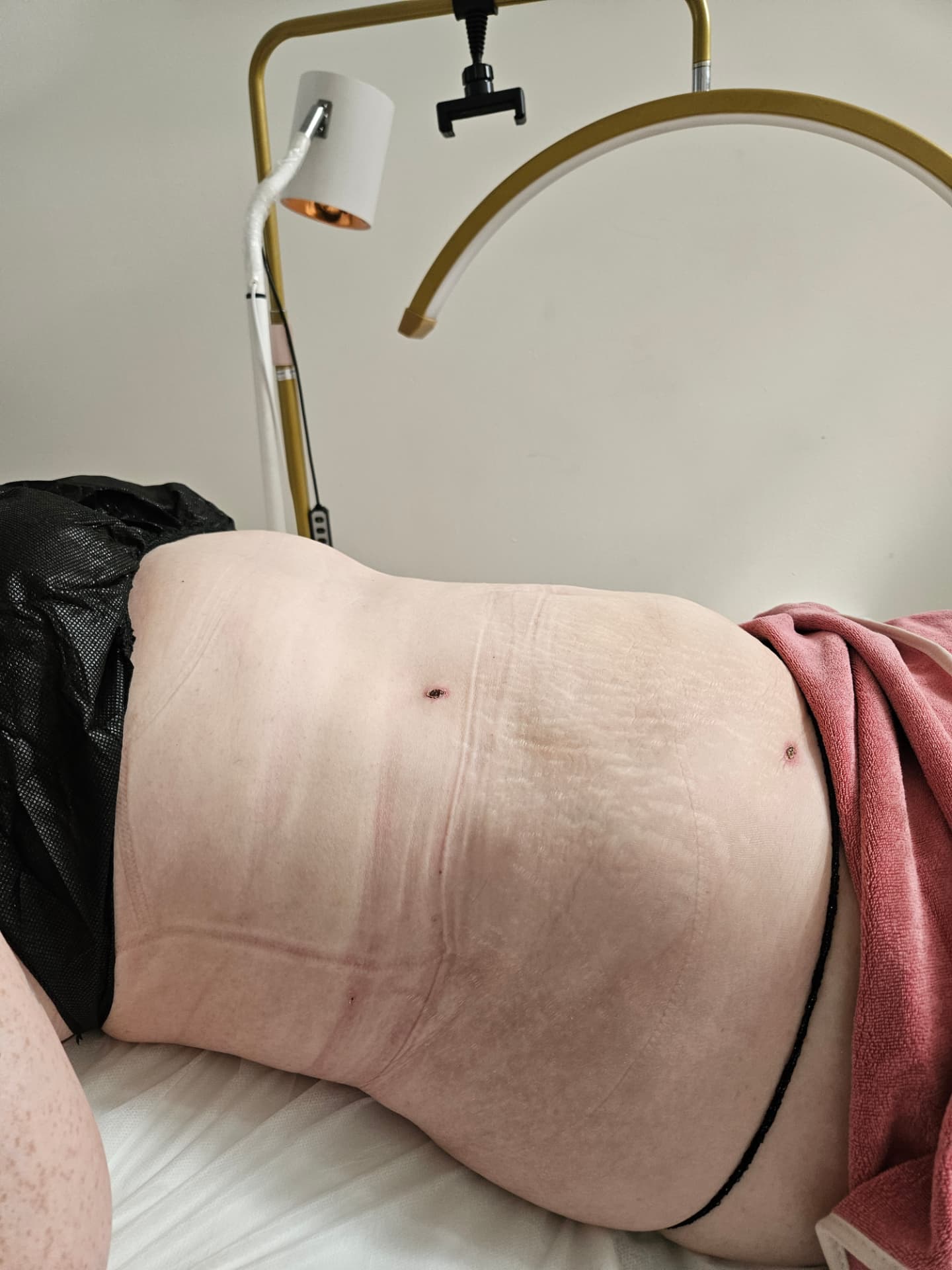
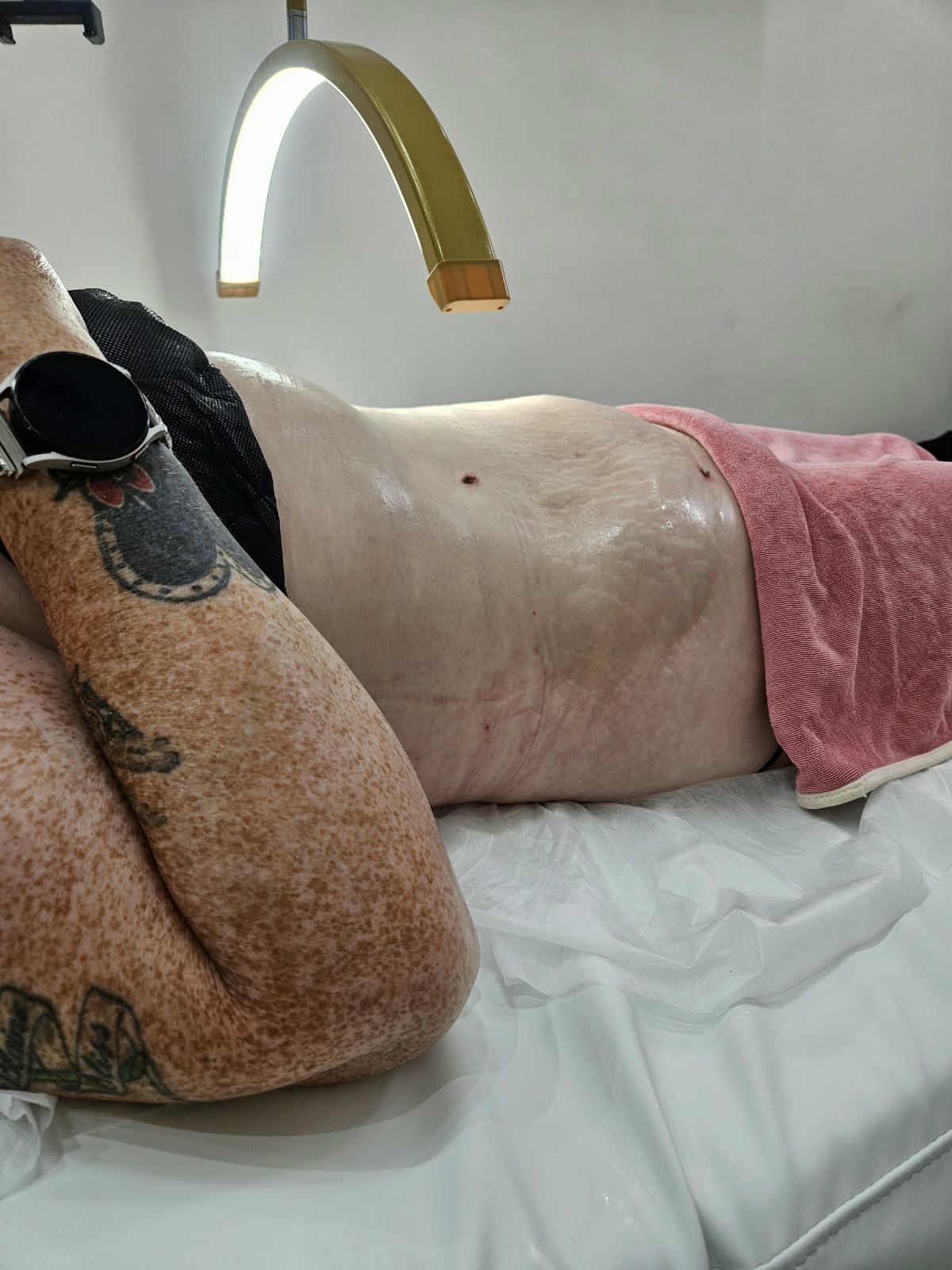
Lymphatic Drainage Massageexplained properly.
What the treatment is, who it suits, when it is needed and why it is worth having done by a clinic that will also handle the follow-up.
What the treatment is
Manual lymphatic drainage is a light, rhythmic, directional massage that follows the lymphatic pathways and encourages fluid towards working lymph nodes. It is nothing like a deep tissue massage. The pressure is deliberately gentle because the vessels being worked on sit just under the skin, and the sequence matters more than the force.
Who it is for
Primarily clients recovering from liposuction, VASER, tummy tuck, BBL or similar body procedures. It also suits people dealing with persistent bloating, heaviness in the legs, sluggish circulation or fluid retention, and clients who simply want a calm, restorative course of treatment.
When it is needed
Post-surgically, usually within the first week once your surgeon is happy for you to start, with frequent early sessions tapering as swelling reduces. Non-surgical clients book whenever symptoms bother them, though a course spaced over several weeks gives far more than a single appointment.
Why professional care matters
Untrained pressure on a freshly operated body can be painful and counter-productive, and a generic spa massage does not follow drainage pathways at all. Post-operative tissue needs someone who understands where fluid is being directed, where seromas can form and when to stop and refer you back to your surgeon.
What it costs youto leave it alone.
Fluid that is left to sit
Retained fluid keeps the area swollen, heavy and tender for far longer than necessary and makes it impossible to judge your real result. It also increases the likelihood of the tissue hardening as it heals.
Fibrosis forming unnoticed
Hard, lumpy or ridged tissue often starts quietly in the first few weeks. Clients who skip drainage frequently return months later needing a longer, more intensive course of fibrosis work to correct something that early sessions would have prevented.
Booking a general massage instead
A standard deep tissue or sports massage applies the wrong pressure in the wrong direction on recovering tissue. It can be uncomfortable, unhelpful and, on very fresh post-operative areas, unwise.
How we runthis treatment.
Assessment
We review your operation date, surgeon's instructions, medications and how the tissue looks and feels before touching anything.
Schedule planning
You are given a realistic number of sessions and spacing, built around your surgery date rather than a generic package.
Drainage session
Gentle, directional work following lymphatic pathways, adjusted to what the tissue tolerates on the day.
Between-visit guidance
Practical instruction on compression, hydration, walking and positioning so progress holds between appointments.
Review & taper
As swelling reduces we space sessions further apart, and add fibrosis work if any area is firming up.
What you actuallyget out of it.
Faster reduction in swelling
Fluid is actively moved out of the tissue rather than left to disperse on its own timeline.
Less discomfort and tightness
Most clients report relief from heaviness and pulling within the first few sessions.
Lower fibrosis risk
Early, consistent drainage is the most practical protection against tissue hardening unevenly.
A clearer view of your result
Once fluid settles you can actually see the contour, which makes any remaining issue easier to address early.
Calm, restorative sessions
The rhythm of the work is deliberately gentle, and clients routinely fall asleep during treatment.
Flexible appointment times
Open Monday to Saturday, 10am to 7pm, so post-operative sessions fit around work.
What this treatmentis for.
- Less swelling and a faster, more comfortable recovery
- Lower risk of hardened, lumpy tissue forming
- A calmer, lighter feeling after every session
- Post-op clients seen six days a week, 10am to 7pm
The detail behindlymphatic drainage massage.
Manual technique
Treatment is hands-on, using light, rhythmic strokes along lymphatic pathways, starting proximally to clear the route before working the congested area. Sessions typically cover the abdomen, flanks, back, thighs or arms depending on what was operated on, and nodes in the groin, axilla and neck are engaged as part of the sequence.
Post-surgical versus wellness drainage
Post-surgical drainage is scheduled tightly around an operation date, is more frequent at the start and is coordinated with compression and fibrosis work. Wellness drainage for bloating, heaviness or water retention is a lighter commitment, often a shorter course with occasional maintenance sessions.
Compression, hydration and movement
Drainage works best alongside correctly fitted compression, good hydration and regular gentle walking. Garments that are too loose do nothing and garments that bunch can create indentations, so we check fit and advise on positioning at each visit.
When we refer rather than treat
Signs of infection, an unexplained hot or expanding area, or anything that looks like a seroma is referred back to your surgeon or GP rather than massaged. Consultation before treatment is standard, and we will always say when something is outside our scope.
After surgery
We work to a schedule built around your operation date, usually starting with frequent sessions and tapering as swelling reduces. You are given clear guidance between visits.
Not had surgery?
Drainage also helps with bloating, heaviness and sluggish circulation. Many clients book a course purely for how it makes them feel.
Common questions aboutlymphatic drainage massage.
- When can I start after surgery?
- Usually within the first week, following your surgeon's guidance. Bring any post-operative instructions to your first session and we will build the schedule around them.
- How many sessions will I need?
- Most post-surgical clients need a course rather than a single session, with more frequent appointments early on and wider spacing as swelling reduces. We set out a realistic number at your first assessment.
- What does a session cost?
- Pricing depends on the area and whether you are booking a single session or a post-operative course. Call 07455 249886 and we will confirm before you book, so nothing changes on the day.
- Does it hurt?
- No. The pressure is light and directional by design. Post-operative areas can be tender, so we adjust to what you can comfortably tolerate at each stage.
- How long does an appointment take?
- Allow around an hour, with your first visit slightly longer because it includes assessment and planning.
- Can I book if I had surgery at another clinic or abroad?
- Yes. We regularly treat clients who had procedures elsewhere. Bring your post-operative instructions and any compression garments you were given.
- Can I be seen today?
- Same-day appointments are available for most non-surgical treatments, including drainage, subject to the diary. Call 07455 249886 to check what is free.
- Do you see clients from outside Enfield?
- Yes: Enfield Town, Southgate, Winchmore Hill, Palmers Green, Cockfosters, Edmonton, Potters Bar, Barnet and Chingford, plus wider north London and Hertfordshire.
Protect the result you already paid for.
Book drainage early and give the tissue the best chance to settle smooth and even. Call the clinic or send an enquiry with your surgery date and we will plan the schedule with you.
146 Lancaster Rd, Enfield EN2 0JS · Mon–Sat · 10am–7pm · Sunday closed