Brazilian Wood Therapyin EnfieldNon-Surgical Body Contouring
Brazilian wood therapy uses sculpted wooden tools to work stubborn areas, stimulate circulation and contour the waist, hips, thighs and abdomen. It is firm, purposeful work rather than a relaxing massage, and it is the treatment clients choose when they want a smoother, more defined line without needles, surgery or downtime.
No needles, no surgery, no downtime · pairs with drainage for a full contouring programme
Brazilian Wood Therapyexplained properly.
What the treatment is, who it suits, when it is needed and why it is worth having done by a clinic that will also handle the follow-up.
What wood therapy is
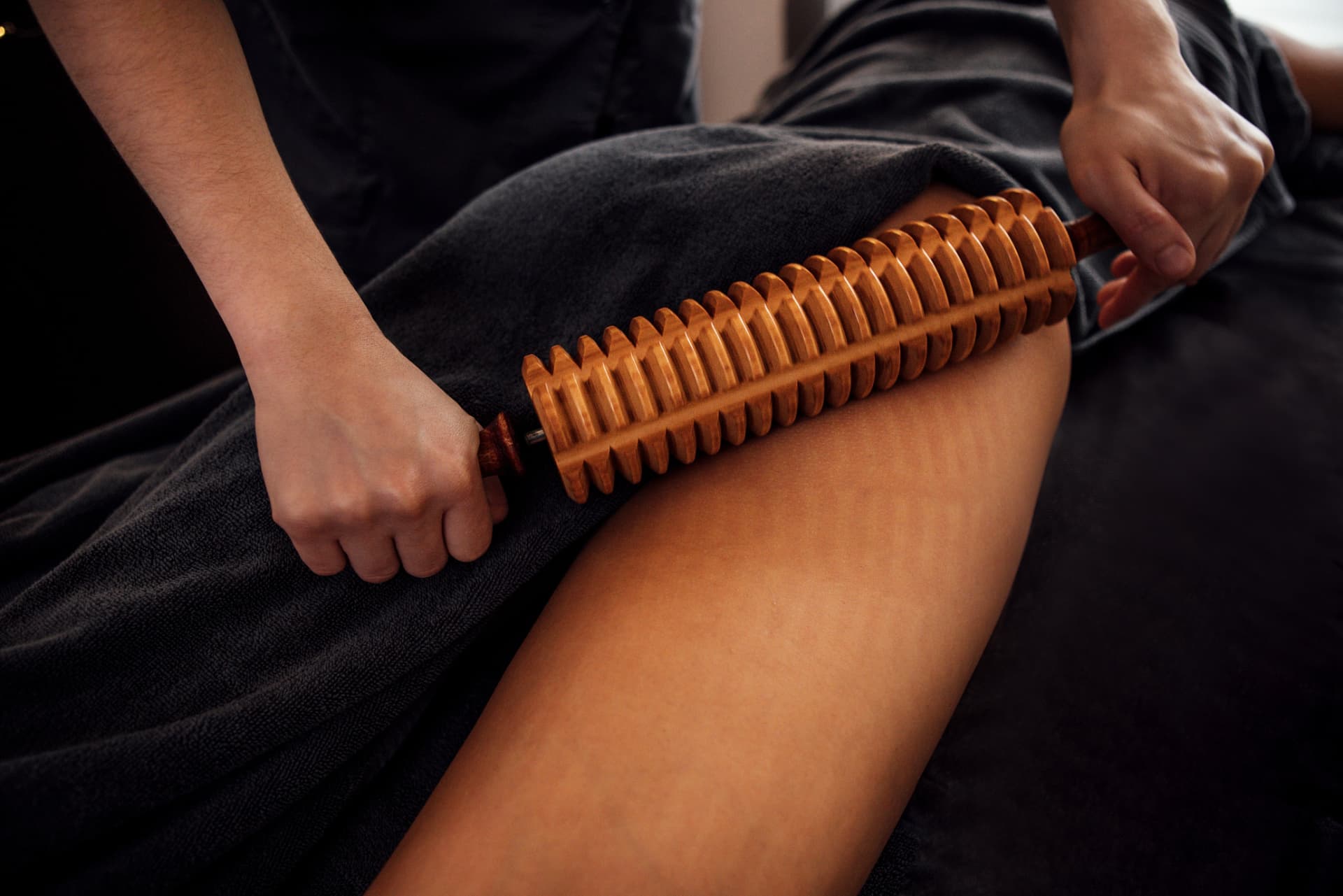
A manual body contouring treatment using hardwood tools shaped for specific areas: a rolling pin style tool for the thighs, a cupped tool for the abdomen, a curved board for the waist and hips. The therapist applies rhythmic pressure to work the tissue, stimulate circulation and encourage lymphatic movement across a course of sessions.
Who it is for
Clients who want visible shaping without an operation, people working on the waist, hips, thighs, abdomen or arms, and post-operative clients who have been cleared and want to maintain their contour. It also suits anyone who wants to feel something physical happening rather than sitting under a machine.
When it is needed
Before an event where you want a tighter line, as an ongoing maintenance programme, or after weight change when an area looks soft rather than reduced. Post-surgically it comes later in the timeline, once your surgeon has cleared firm hands-on work.
Why technique matters
The tools do not do the work, the pressure, direction and rhythm do. Applied badly, wood therapy is simply uncomfortable and bruising with nothing to show for it. Applied properly and consistently, it produces a noticeably smoother and firmer looking area across a course.
What it costs youto leave it alone.
Expecting one session to do it
Wood therapy rewards consistency. A single appointment feels good and looks marginally tighter for a day or two, then fades. Clients who book one session and conclude it does not work usually never gave the course a chance.
Untrained, overly aggressive pressure
Excessive force does not accelerate results. It causes unnecessary bruising and soreness that then forces a gap between sessions, which is the opposite of what the treatment needs.
Treating too soon after surgery
Firm contouring work on tissue that is still healing can be painful and unwise. Post-operative clients need drainage first and clearance from their surgeon before wood therapy is introduced.
How we runthis treatment.
Consultation
We look at the areas you want worked on, check medical history and agree what is realistic over a course rather than a single visit.
Course planning
A schedule of sessions with sensible spacing, plus advice on hydration and movement between appointments.
Preparation
Each session starts with warming the tissue and stimulating circulation before the sculpting tools are used.
Sculpting work
Targeted tool work across the waist, hips, thighs, abdomen or arms, with pressure adjusted to your tolerance.
Drainage finish
Sessions finish with lymphatic work so the fluid mobilised during treatment is moved out rather than left sitting.
Review
We review progress across the course and adjust the areas, pressure and spacing as the tissue responds.
What you actuallyget out of it.
Visible smoothing
Skin over treated areas looks smoother and firmer as the course progresses.
A more defined line
Waist, hips and thighs are worked directionally, so the result reads as shape rather than general massage.
No downtime
You leave and carry on with your day. Mild tenderness is the only common after-effect.
Nothing injected or surgical
Entirely manual, with no needles, no anaesthetic and no recovery period.
Circulation and lymphatic stimulation
The rhythm of the work supports drainage as well as contouring, which is why we finish with lymphatic strokes.
Pairs with your recovery plan
For post-operative clients it slots in after drainage and fibrosis work, once cleared, as maintenance.
What this treatmentis for.
- Smoother, firmer looking skin over treated areas
- A more defined waist and hip line across a course
- No downtime, no needles, no surgery
- Pairs naturally with drainage and post-op care
The detail behindbrazilian wood therapy.
The tools and what each does
A ridged roller breaks up tension and stimulates circulation on the thighs and glutes. A cupped or 'mushroom' tool works the abdomen with suction-like pressure. A curved contour board shapes the waist and hips with long directional strokes. Tool choice is matched to the area and to how the tissue responds, not applied as a fixed routine.
Areas treated and typical courses
Most clients work on the abdomen and waist, hips and outer thighs, glutes, or the backs of the arms. Sessions are usually booked weekly or twice weekly in the early phase, then spaced out for maintenance once the shape has settled where you want it.
Combining with drainage and other treatments
Wood therapy and manual lymphatic drainage work well as a programme: the contouring work mobilises fluid and the drainage clears it. Post-operative clients follow a strict order, drainage first, fibrosis management where needed, wood therapy last and only once cleared.
What it will not do
It is not a weight-loss treatment, it does not remove fat cells and it will not tighten significantly loose skin. If your goal genuinely requires surgical removal, we will say so at consultation rather than sell you a course that cannot deliver it.
How it works
Each tool is shaped for a specific area. Pressure and rhythm stimulate circulation and the lymphatic system while working the tissue and fatty deposits beneath the skin.
Getting results
Wood therapy rewards consistency. We recommend a course rather than a one-off, and pair it with drainage where suitable.
Common questions aboutbrazilian wood therapy.
- Does it hurt?
- It is firm but should never be unbearable. We adjust pressure to your tolerance, and some tenderness for a day afterwards is normal and settles quickly.
- How many sessions do I need?
- Wood therapy works as a course, not a one-off. We agree a realistic number at consultation based on the area and what you want to achieve, then review as the tissue responds.
- What does it cost?
- Price depends on the areas treated and whether you book single sessions or a course. Call 07455 249886 and we will confirm before you book.
- How long does a session take?
- Most sessions run around an hour, including warming the tissue at the start and lymphatic work at the end.
- Will I bruise?
- Light tenderness is common, heavy bruising is not the aim. If you bruise easily, tell us at consultation and we will work at lower pressure.
- How long do results last?
- As long as you maintain them. Clients who finish a course and then space sessions out for maintenance, alongside stable weight and activity, hold the shape best.
- Can I combine it with post-op recovery?
- Yes, once your surgeon clears firm hands-on work. Drainage comes first and wood therapy is introduced later in the timeline.
- Can I be seen this week?
- Same-day appointments are available for most non-surgical treatments, subject to the diary. Call 07455 249886 to check availability.
Start the course and give the shape time to show.
Tell us the areas you want worked on and we will set out a realistic schedule and price at consultation. Call the clinic or send an enquiry.
146 Lancaster Rd, Enfield EN2 0JS · Mon–Sat · 10am–7pm · Sunday closed